

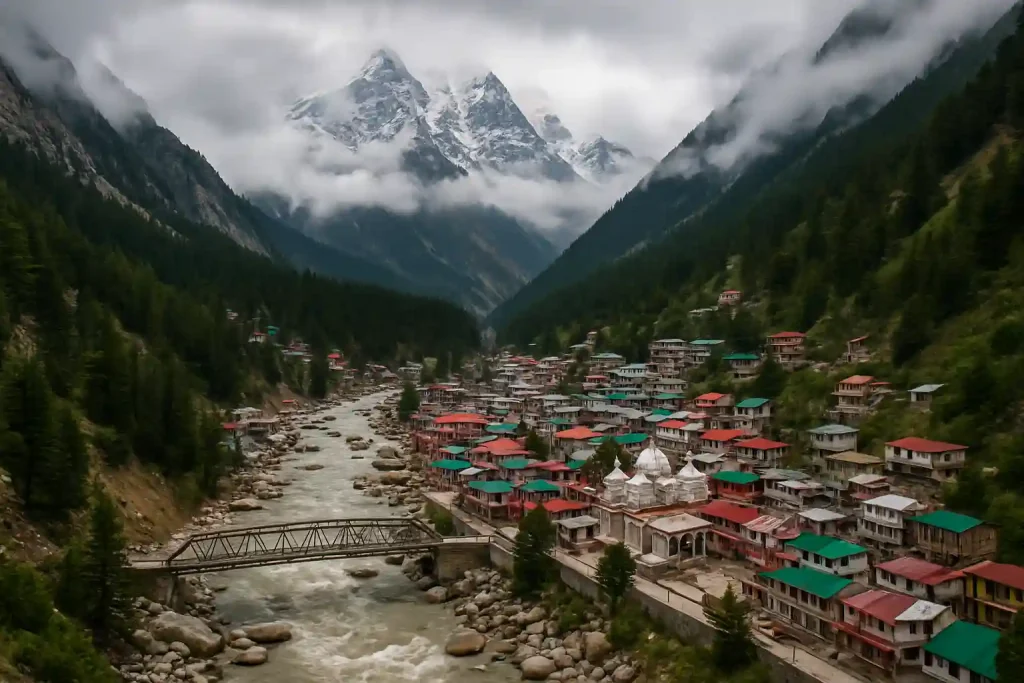
Hidden deep in the Garhwal Himalayas, above 3,000 meters from sea level, is the holy town of Gangotri. It is not just the origin of the sacred River Ganga but also one of the four Char Dham temples that worshipers would wish to visit. Even if the destination is religious in nature, there is something that every visitor must take into account before arrangements are made for the trip—the weather in Gangotri. You can choose Chardham Heli Yatra to visit here.

It is never normal weather in Gangotri at this altitude. The sun might be shining one moment, and within a few minutes, clouds move in or the winds turn ice-cold. Snow, rain, and completely unpredictable temperature fluctuations are all included in the package here. Which explains why the weather in Gangotri is as vital as the details of the dates that the temple is open through weather reports.
Why the Weather Matters So Much
In most other places, seasons only change the scenery, but in Gangotri, the season decides if you can even visit at all. The temple works for a couple of months by itself, and the rest of the months it is closed under the thick snow. Roads, paths, and even your own comfort during travel—everything is dependent on the weather here. Come at the correct time, and you’ll be walking along the raucous Bhagirathi River with snow-wearing mountains at your back. Come at the incorrect time, and you may face blocked roads, freezing gusts, or even landslides. Which is why weather in Gangotri timing is important.
Summer in Gangotri (April to June)
Summer is the best weather in Gangatori. As snow melts in late April, roads are cleared, and it is planned to open temple gates. Weather at this time ranges from 10°C to 25°C. The days are pleasant and hot, but nights remain woolens deficient.
This is also the time when Gangotri blossoms. Travellers from everywhere come to perform darshan, whereas trekkers go to Gaumukh Glacier or Tapovan. Weather in Gangotri during this time of the year is ideal if you are looking to have both spirituality and adventure.
May and June are excellent. The valleys are green, the river is gurgling, and there is a mood in the air. This is when you need to plan for if you are going there for the first time.
Monsoon in Gangotri (July to September)
July arrives with the rain. It becomes chilly, with the temperature ranging from 10°C to 15°C, but heavier rain is a greater danger. The mountains are green and new, waterfalls dot every place, and the valley is given a spell of fantasy. But the monsoon also makes the trip dangerous.
The weather in Gangotri during this period of the year can become highly volatile. Landslides become a daily incident, roads become slippery, and treks become risky. Hence, it is that devotees usually avoid traveling during July and August. September is better, as rain decreases and clouds start clearing. Late September can be a good time for people who like to stay in peace and away from people.
Winter in Gangotri (October to March)
By October, winter starts. The days are cold and the nights freezing. The day temperature goes down to single digits and usually below zero at night. By end October or early November, the temple closes for the season, and the idol of Goddess Ganga is shifted to Mukhba village close to Harsil, where it is worshiped until summer arrives.
From November to March, Gangotri is snowed in. During these months, weather in Gangotri is harsh and ruthless. Roads become isolated, heavy snowfalls, and temperatures below freezing are common. Security forces and some residents are the only ones left. For tourists, this period is not possible, but to imagine the temple under a thick blanket of snow still gives a serene appearance.
Month-by-Month Weather in Gangotri
Here’s a short idea of what the weather in Gangotri is like each month:
January & February—These are the most challenging months. The whole valley lies under thick snow, temperatures are below freezing, and the region is effectively cut off. It is simply not possible to visit.
March—Cold persists, but days gradually get a little better. Snow is still present, but one feels that the mountains are quietly getting ready for spring.
April—Things really start changing. Snow melts, roads open, and pilgrims return slowly. Chilly days, but bearable, making it the first opening for travel.
May & June – It is the ideal time to visit. The temple opens, the valley gets a green cover, and the Bhagirathi River flows in full strength. Days are nice, though nights remain cold, so warm clothing is a necessity.
July & August – Monsoon season. The scenery is romantic with waterfalls and new greenery, but it’s not safe. Landslides and treacherous paths are the norm, so travelers generally keep away during these months.
September – Rains cease, blue sky, and the valley is tranquil and lush green. It is a good time to visit if you prefer less crowd and cool mountain air.
October—Winter gradually comes back. The days grow cold, the nights nip harder, and the temple shuts for the season at the end of the month.
November & December—It is deep winter now. Heavy snow blankets everything, the mercury falls below zero, and the site is once more quiet and isolated till spring.
Best Time to Visit
The end of April to June is good to plan your trip. That is when the weather in Gangotri is ideal; the temple is open, and the valley is also at its peak beauty. September and early October are also fine if you are averse to crowds and not fond of cold nights.
Do not come in July and August due to the monsoon, and winter is just not possible at all for travel.
Tips for Dealing with Gangotri Weather
- Take warm clothing even during summer. Nights are extremely cold.
- Keep an eye on the road condition, as monsoon landslides are usual.
- Take comfortable walking shoes for boulders and rocks.
- Drink plenty of water and take it easy; the thin air becomes exhausting.
- Double check temple timings prior to going, as opening and closing dates change annually.
The Magic of Every Season
There’s beauty in each one of the types of weather in Gangotri. Summer has the temple bell tolling in the valley under a bright blue sky. Monsoon has the green hillside and waterfalls to draw a dramatic landscape. And even if you cannot go during winter, it is sufficient to dream of the temple under snow as serene and divine.
The move of weather in Gangotri makes you aware of how nature is strong, beautiful, and unstable at the same time.
Final Thoughts
So plan your journey seasonally. Travel during summer if you like bustling crowds and short hikes, or in September for peaceful, chilly weather. Travel at whatever time, and you will be prepared to encounter unexpected climatic variations. That’s the blessing of being within the Himalayas.
Standing on the Bhagirathi River with the temple in the distance and snowcaps in the background, you’ll see why it was so much worth waiting for the good weather in Gangotri. And that will be a memory that stays long after you are gone from the valley.