

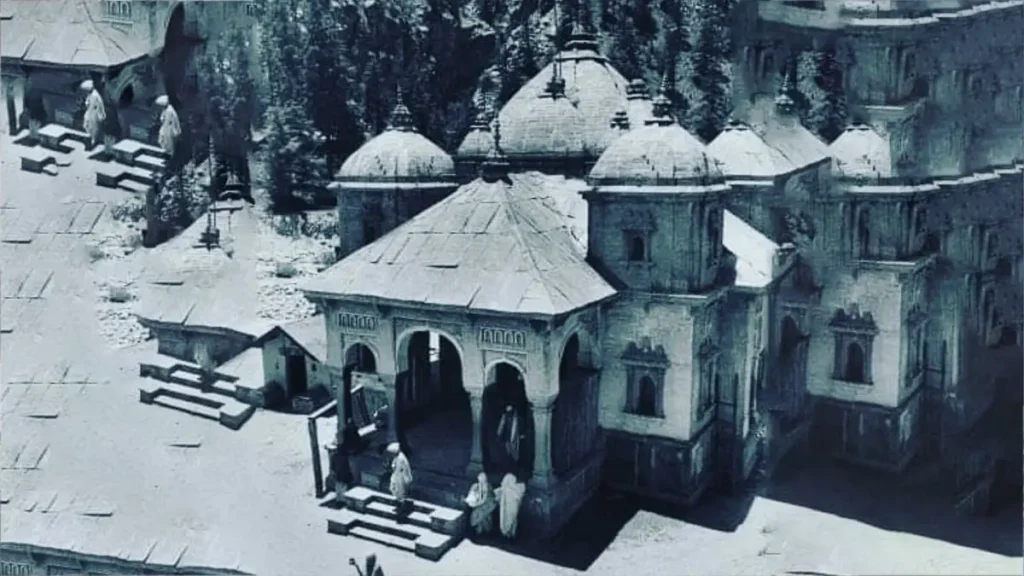
Gangotri Temple sits high in the Himalaya as It marks where the sacred river begins. The place has old myths about Bhagiratha and Shiva. The present temple was built by a Gorkha leader long ago. People visit as part of the Chardham journey each year.
Gangotri is a small town on a river bank as The river here is the Bhagirathi. Far above, the ice melts and the river begins. People come to say thank you to the river. They come to the white temple that stands here. The place feels calm and holy and adds to the importance of Gangotri Temple History. Prefer a stress-free visit? Check our Chardham Yatra by Helicopter or Do Dham Yatra by Helicopter.
Quick facts
| Fact | Simple note |
| Place | Gangotri, Uttarkashi district, Uttarakhand. |
| River | Bhagirathi starts near Gaumukh and later becomes Ganga. |
| Temple built by | Amar Singh Thapa (Gorkha leader). |
| Height | High in the mountains (over three thousand meters). |
| Closed in winter | Idol moves to Mukhba village for six months. |
Origin of Gangotri Temple and Early History
This part of Gangotri Temple History shows how the site began. Long ago the place was just wild land and snow. People told stories about how the river came down from the ice. Over time, small shrines were made near the spring. Later, a bigger temple was built to honor the river goddess. The shrine grew as more people came to pray.
In history books you will read that a Gorkha leader helped build the main temple we see today. The site had small sacred marks before that. But the building that stands now was set up to hold regular worship and to welcome pilgrims. All this forms the early layer of Gangotri Temple History.
Mythological Stories Linked to Gangotri Temple History
The oldest story is about King Bhagiratha. Long ago, his people were in trouble. He wanted the life-giving river to come down from the sky. He prayed hard for many years. The river came, but her flow was too strong. Lord Shiva took the river in his hair to hold her. He let her out slowly so the Earth would be safe as that is why the river is called Bhagirathi and why the place is named Gangotri.
People tell this story to children. They point to the glacier and say, “This is where the river first touched the earth.” The tale makes the place feel like a gift. The temple stands where this story is said to have happened. This legend is central to Gangotri Temple History.
Who Built Gangotri Temple? Historical Accounts
Many sources say the present temple was built by Amar Singh Thapa, a Gorkha general. He lived long ago and worked in the hills of this region. He raised the shrine we see now so people could pray safely. Local records and the district pages also say this. This event is one of the turning points in Gangotri Temple History.
Later, the temple was repaired a few times. The high mountains bring snow and storms. The stone and white paint you see now came from those repairs. Local priest families take care of the rites. The same few families have done the work for many years.
Role of Gangotri Temple in Chardham Yatra History
Gangotri is one of the four key shrines in the Chardham or Chota Char Dham route. Many people who want a full holy tour will visit here. The temple acts as a stop for prayer and blessing on that trip. Pilgrims come by road and by foot from nearby towns. The journey is both a test and a gift. This connection to Chardham travel is a big part of Gangotri Temple History.
People say visiting Gangotri heals the mind. The river’s pure water is part of many rituals. Families bring their elders and children. The place holds both old rites and new travelers who seek peace.
Modern Changes in Gangotri Temple History
The temple still uses old rituals. But the way people reach it has changed. Roads now go higher. Small hotels and shops have grown. Local guides help visitors stay safe. The district office gives rules for the season. These updates are now part of the modern chapter of Gangotri Temple History.
Some modern changes were forced by nature. Floods, storms, and ice breaks have hurt roads and shops in recent years. The community and government have worked on bridges and paths to keep the route open. The shrine also moves the idol to a nearby village called Mukhba for the cold months. This keeps the worship alive even when snow blocks the way. All these efforts shape the ongoing Gangotri Temple History.
How to Get to Gangotri Temple
Closest Airport
Jolly Grant in Dehradun, about 250 km away. Hop in a taxi and take it easy driving through little towns, past Uttarkashi, with rivers and hills all along.
Closest Train Station
Rishikesh station, roughly 235 km out. Easy to grab a bus or taxi there – the mountain roads start right from town.
Routes from Rishikesh or Dehradun
From Rishikesh: Through Chamba and Uttarkashi to Gangotri.
From Dehradun: Past Mussoorie, Barkot, Uttarkashi, then Gangotri.
It’s a chill drive, rivers running next to you, hills everywhere.
Distance and Time
Rishikesh-Gangotri: 235 km, 8-10 hours.
Dehradun-Gangotri: 250 km, 9-11 hours.
Traffic, weather, or stops can stretch it.
Roads in Rainy Season or Winter
Monsoon: Slippery spots, maybe short closures.
Winter: Snow blocks it all – temple shuts till summer.
Check weather and road news first.
Things to Know if You Plan to Go
- The shrine opens in spring and closes in autumn as plan your trip in the warm months.
- You will see the glacier and the start of the Bhagirathi river. It is a short walk from the town.
- Dress warm. Nights are cold even in summer.
- Respect the place. Keep it clean and quiet.
- Stay with local guides if you plan to trek to the glacier.
Best Time to Visit & Weather
Spring & Summer (April–June)
This is prime time – weather’s nice and mild, roads are open, and the temple’s buzzing. Days are sunny for treks to Gaumukh, nights cool enough for jackets. Flowers pop up, Ganga’s flowing strong – perfect for families.
Autumn (Sept–Oct)
Cool, clear skies after monsoon clears out. Fewer crowds, golden leaves everywhere, and crisp air feels fresh. Great for quiet prayers and photos, but pack layers as it gets chilly fast.
Monsoon Risks (July–Aug)
Skip if you can – heavy rains bring landslides, slippery roads, and flash floods. Some paths close, treks get risky. If you go, check updates daily and go slow.
Winter Lockdown (Nov–April)
Everything shuts down under snow – temple closes, roads blocked. The deity’s idol moves to Mukhba village nearby for winter pujas. Cozy vibes there if you’re around, but no Gangotri action till spring.
Darshan, Rituals & Practical Info
Aarti & Darshan Timings
Morning darshan kicks off around 6 AM, evening aarti at 7-8 PM (check boards as they shift with seasons). Mornings feel magical with bells and chants – arrive early to beat lines.
Dress Code
Keep it simple and respectful – no shorts or sleeveless tops. Pants, kurtas, or salwar kameez work fine. Shawls for ladies if needed. Comfortable for cold winds.
Entry Information
Free entry, but VIP passes (₹200-500) cut wait times. Lines move steady, kids and elders get priority. No cameras inside – phones on silent.
Seasonal Closures
Opens mid-April or May after snow melts, closes Oct-Nov when winter hits. Idol heads to Mukhba village for off-season worship. Plan around official dates from temple sites.
Attractions Around Gangotri
Gaumukh / Gomukh Trek
Short 18 km round trip to Ganga’s source – icy glacier views that’ll wow you. Takes 2 days with basic fitness, ponies available. Pure magic seeing the river born.
Pandav Gufa
Cool cave up a quick hike where Pandavas from Mahabharata hid and meditated. Legends say they prayed here – feels ancient and peaceful with Ganga rushing below.
Chirbasa
Pretty pine forest stop on the Gaumukh trail, 4 km from temple. Great for picnics, birdwatching, and camping. Quiet spot to breathe deep and feel the hills.
Local Valleys
Wander Harsil valley nearby – apple orchards, deodar trees, and village charm. Spot blue sheep, sip kadak chai, or just sit by the Bhagirathi river soaking it all in.
Conclusion
Gangotri Temple history is both legend and fact as the myth of Bhagiratha and Shiva gives this place its soul. The Gorkha leader who built the temple gave the site a home for prayer. Over the years, the temple’s look changed a bit but its heart stayed the same. People still come to say thanks to the river and to seek calm. If you go, bring care, warm clothes, and a quiet heart. The Gangotri Temple History lives in the river, the stones, and the stories you will carry home. Prefer a stress-free visit? Check our Chardham Yatra by Helicopter or Do Dham Yatra by Helicopter.
Gangotri Temple FAQs
1. Is Gangotri safe for kids and elders?
Yeah, mostly – roads are decent in season, but stick to main paths and go slow. Helicopter or taxi options help skip tough treks. Pack warm layers and check weather – mountains can surprise you.
2. How do I book darshan or VIP passes?
Just show up early for free entry, or grab VIP tokens (₹200-500) at the counter. Online via temple sites sometimes. Lines aren’t too bad mid-week, mornings best for quick darshan.
3. What’s the Gaumukh trek like for beginners?
18 km round trip over 2 days – rocky but doable with ponies or guides. Start slow, carry water/snacks. Epic glacier views at the end, but skip if rainy or if you’re not fit.
4. When does the temple exactly open and close?
Usually mid-April/May opening after snow clears, closes Oct/Nov for winter. Idol moves to Mukhba village till then. Check official temple site or apps for exact dates each year.
5. What if it rains or snows – can I still visit?
Monsoon? Risky with landslides – check road status first. Winter? Nope, all closed. Best bet’s April-June or Sept-Oct. Have a backup plan like Harsil valley nearby.