

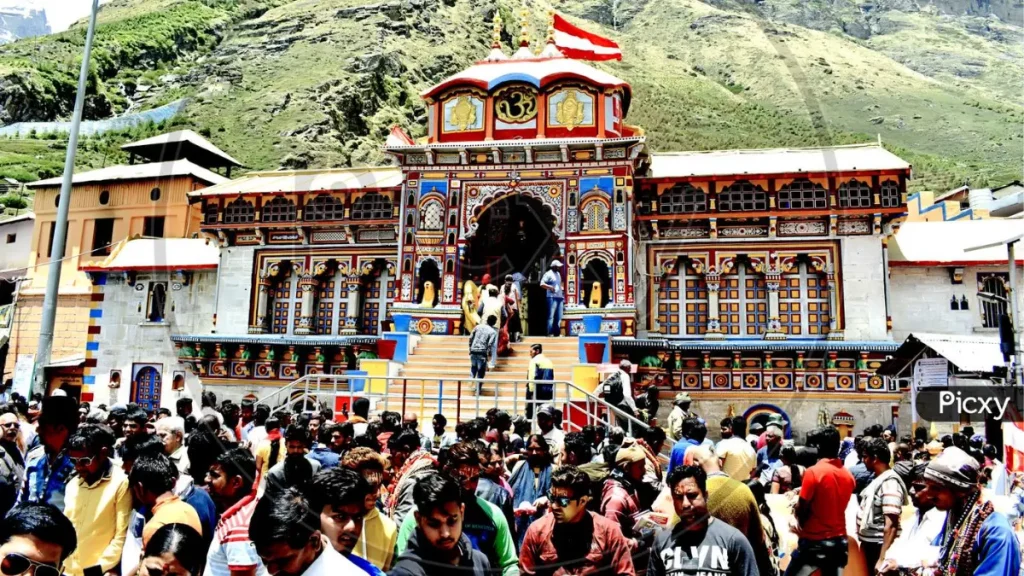
The Badrinath crowd is something that you cannot just remove from your mind after you experience it. It wasn’t a conclave of mankind—it is a wave of devotion, faith, and love. Thousands of Indian devotees flock this little holy town deep within the Himalayas each year. They bow to it Lord Badrinarayan, the merciful incarnation of Lord Vishnu.
As soon as you arrive in Badrinath, you feel the environment first. Prayers surround you. Bells ringing, the smell of incense sticks, and the movement of people walking with hands clasped together — all soften your heart. The people of Badrinath never boom nor become irritable; they are peaceful, energized, and motivating by nature.
You can have a splendid journey to Badrinath with our Chardham Yatra by Helicopter tour. Also check our Do Dham Yatra by Helicopter Tour, To visit Kedarnath ji and Badrinath ji in one day.
Why Understanding the Badrinath Crowd Matters for Pilgrims
For most people, a trip to Badrinath is not just another journey. It is something they wait for, plan for, and carry in their heart for years. But many pilgrims reach the temple without knowing how crowded the place can get, especially during the main yatra months. Long queues, slow movement, and limited places to stay can turn a peaceful visit into a tiring one. When you understand the crowd situation beforehand, you can plan your day better, stay relaxed, and spend your energy on devotion instead of worry.
Average Waiting Time for Darshan During Peak Season
During peak yatra season, the waiting time for darshan at Badrinath can vary from two hours to even six hours on very busy days. On weekends and special occasions, the wait may be longer. Elderly pilgrims and families with children should be prepared for this Badrinath crowd and plan rest breaks accordingly. Carrying water and staying patient makes the wait easier and helps keep the experience positive.
Badrinath Crowd – When It Starts
Badrinath crowd starts arriving as early as when the temple opens in May. As the temple is closed during winter due to snow, all had been waiting eagerly for the day when the temple would open again. During May to November, the place is crowded with activity — families, couples in their mid-sixties, children, and tourists.
When you get there, you can see people coming in from all sides — some walking very slowly, some sitting down to rest, some helping others. The smiling faces are tired. Badrinath’s crowd is humongous but no one will grumble. They are all moving forward with peace, praying in their minds.
When Does Badrinath Get the Most Crowded?
Badrinath gets most crowded between mid-May to late June and again during September to early October. These months coincide with the peak Char Dham Yatra season, school holidays, and favourable weather. During this period, waiting time for darshan increases, hotels get booked quickly, and road traffic slows down. Pilgrims visiting during these months should plan travel and stay well in advance.
Least Crowded Time to Visit Badrinath Temple
If you wish for a quieter and more peaceful darshan, the best time to visit Badrinath is during early May or towards the end of September. During these days, the weather remains comfortable, but the number of pilgrims is slightly lower. Morning hours are usually calmer, and you get more time inside the temple without feeling rushed. Many pilgrims say these days allow them to truly sit, pray, and absorb the spiritual atmosphere.
The Real Picture of the Badrinath Crowd
In May or June, you will find the Badrinath filled with devotees. The Joshimath to Badrinath highway is filled with pilgrim-packed cars, jeeps, and buses. Roadside stalls on either side of the road are open. Folks are buying prasad, flowers, and woollen attire. Others are having a cup of tea in small rest houses, chatting about other pilgrims whom they met moments before.
You arrive at the temple and you get lines but no pushing and pushing. The pilgrims stand in line patiently to be able to glimpse the Lord. The crowd move slowly in Badrinath but their hearts pound — with excitement and devotion. When you have finally reached the face of the idol, all the trouble that you endured to get there is worth it.
Why Badrinath Crowd is Always Huge
There are straightforward reasons why Badrinath crowd is so large each year. Firstly, it is one of the four sacred Indian Char Dham temples. Each Hindu wishes to have a pilgrimage to these temples at least once during their lifetime.
First, the temple is open only six months a year. Everyone attempts to go to the temple within that brief span, so of course, the crowd arrives. And third, Badrinath is not just a religious destination — it is a serene destination. Even atheists feel something holy here. The mountains, the cutting breeze, and the holy silence attract everyone to the temple.
How to Manage the Badrinath Crowd During Your Visit
Managing the crowd at Badrinath is possible with small but thoughtful steps. Reaching the temple early in the morning usually means shorter queues and a calmer atmosphere. Avoiding weekends, if possible, can also reduce waiting time. Booking your stay and transport in advance saves you from last-minute stress. Keep your belongings light, carry water, and follow temple instructions. Most importantly, stay patient — the journey itself is part of the spiritual experience.
Crowd management in Badrinath is challenging and a task in itself. The temple volunteers, the staff there, and the locals all try their best to make it happen. Official gates of entry and exit, public address through loudspeakers, and medical tents in case of illness are all provided.
The Pilgrimage and the Badrinath Crowd
The line before Badrinath doesn’t start outside the temple — it starts miles away. You can spot miles-long lines of cars full of pilgrims from Rishikesh, Rudraprayag, and Joshimath. Strangers greet strangers with smiles, sing devotional songs, and share food halfway. Street stalls and vendors are selling briskly this time around. The road is a floating sea of faith.
As you finally reach the town of Badrinath, you feel as if you are surrounded by a spiritual kingdom. You hear the soft gurgling of the river Alaknanda running alongside you, the serious towering white peaks silently stare at you, and in between — the citizens of Badrinath glow like a religious fair.
How the Badrinath Crowd Supports Local Life
To the inhabitants of Badrinath, the tourists at Badrinath are not tourists — they are bread and butter. The local people earn their bread for six months that the temple is open. They have hotels, food stalls, drive taxis, and offer guiding services to the travelers.
The tourists are a source of enjoyment, but equally they bear responsibility. It is not simple to keep the town clean with so many tourists. The locals and the management of the temple always caution people to dispose of waste materials in the correct manner and behave respectfully towards the holy temple. The tourists by and large comply with the request out of decency because they understand that they are in the holy abode of God.
When Badrinath Crowd Becomes Silent
As winter approaches in November, snow begins to cover roads. The temple gets closed, and the image of Lord Badrinath is moved to Joshimath. The population in Badrinath slowly decreases. The shops are closed down. The roads become deserted. The boisterous chants fall silent.
It is not the most natural thing to expect that the same place, so thick with humanity a little less than a month ago, now once more exists beneath a cloak of white. But the faith does not perish — it only lies in wait until the following summer when the temple resumes and the Badrinath crowd flow back once more with renewed passion.
For First-Time Travellers—Why Hindus Crowd Badrinath
If you are a first-time visitor to Badrinath, you can do some simple things to make the most out of it even in spite of the Badrinath crowd:
Go Early or at the End of the Season:
May and September are the off-season months with peaceful weather.
Book Accommodation Ahead:
Booking of a room in advance is done when the population in Badrinath is increasing.
Start Darshan Early Morning:
Early morning is quiet and less populated.
Be Patient and Humane:
All of them have come for one reason — to obtain blessings.
crowd always huge
Staying Safe in the Crowd in Badrinath
Oxygen is light at Badrinath because it is of high height. Pilgrims become tired or drowsy while trekking in the Badrinath line. So, trek slowly. Oxygen tents and medic camps are available near by to support. Senior citizens may move by palkis or pony. Volunteers will always be there to help.
The secret here is not to rush. Faith will function better when the mind is at peace. Walking is easy when your heart is peaceful.
The Crowd Spirit in Badrinath
The best part of the people at Badrinath is that they treat all people with respect. The poor and the rich, the young and elderly, are all one in a queue. No one says a word about whom they are or to which place they belong. They all simply say “Jai Badri Vishal” smiling.
When you are there, you feel something akin to a deep intensity — an experience of togetherness through blind faith. The crowd of people in Badrinath does not consist of people; it consists of hearts beating as one in devotion.
What the Badrinath Crowd Teaches Us
Every single face of the half-million faces in the sea of human beings at Badrinath contains a story. Some are praying for their kin, some for peace, some for no reason at all except to thank the Lord. Soaking all these human beings as a whole, you can realize that this is not temple darshan at all — it’s an odyssey of the heart.
It is a lesson in humility when you stand in line. It is a lesson in compassion when you help a person. And it is a lesson in humility when you stand before the Lord after a couple of hours’ walk. The crowd in Badrinath instills a lesson in one that religion is not spoken — it is in the heart.
Want a Smoother Experience? Choose a Planned Badrinath Yatra
Handling travel, accommodation, and darshan planning on your own can be challenging during peak season. Many pilgrims choose a planned Badrinath Yatra to avoid confusion and delays. With pre-arranged stays, organised travel, and proper guidance, the journey becomes more comfortable and stress-free. This allows you to focus more on prayer and less on managing logistics.
During peak crowd days, even simple things like hotel availability, transport timing, and darshan queues can become confusing. A planned Badrinath Yatra helps avoid last-minute stress, especially for senior citizens and families. With fixed schedules and local support, the journey stays calm even when the Badrinath crowd is at its highest.
If you are looking for a smoother and well-managed journey, exploring Badrinath Yatra packages can be a helpful option, especially during crowded months.
Frequently Asked Questions About Badrinath Crowd
Is Badrinath always crowded?
Badrinath is busiest during the Char Dham Yatra season. Outside peak months, the crowd is much more manageable.
What is the best time of day for darshan?
Early morning is usually the best time, as the crowd is lighter and the atmosphere is peaceful.
Can planning in advance help avoid crowd problems?
Yes, choosing the right dates, booking early, and planning your darshan timing can make a big difference.
Are yatra packages helpful during crowded periods?
Yes, they help manage travel, accommodation, and timing better, especially during peak season.
Conclusion
The Badrinath crowd is not crowd at all. It is a throbbing beat of this sacred dwelling. It fills the mountains with life, heat in the biting winds, and hope in every single individual who enters.
When you see the crowd of Badrinath, don’t see it as a crowd of humanity. See it as a thousand hearts beating with one light. It is divine, serene, and filled with devotion. And when you are part of it, that peace lingers on back home — in your heart, always. Prefer a stress-free visit? Check our Chardham Yatra by Helicopter or Do Dham Yatra by Helicopter.