

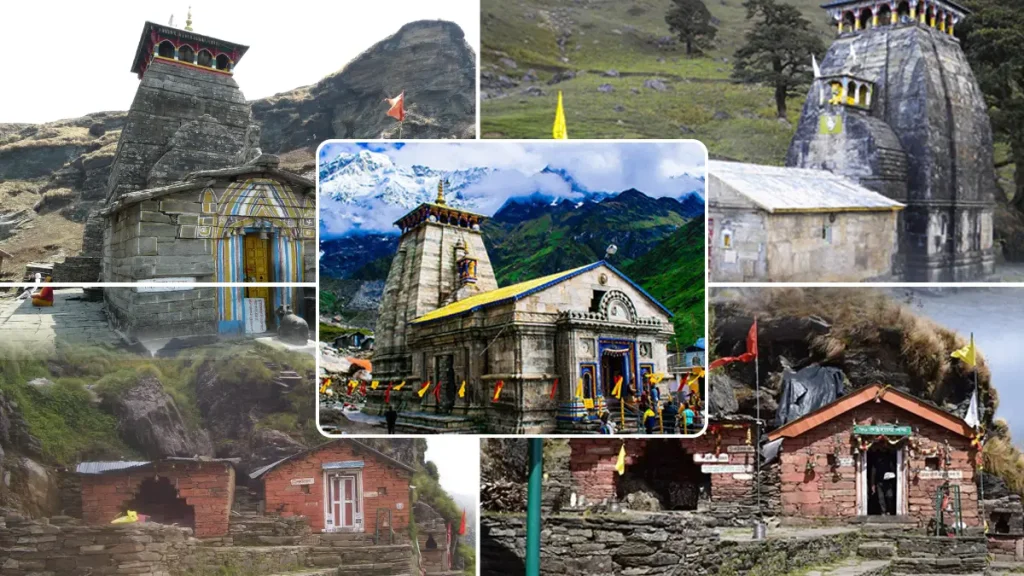
Panch Kedar Yatra is one of the most sacred Himalayan pilgrimages for Lord Shiva devotees. It covers five ancient Shiva temples hidden deep in the Garhwal Himalayas. This guide explains everything in simple words—temples, travel route, best time, trekking level, budget, and how you can plan a smooth Panch Kedar Yatra in 2026. If you are planning to visit the divine Panch kedar and Chardham yatra by Helicopter.
What Is Panch Kedar and Why Is It So Important?
Panch Kedar refers to five holy temples of Lord Shiva located in Uttarakhand. According to legend, Lord Shiva appeared in different forms at these places after the Mahabharata war. Visiting all five temples is believed to wash away sins and bring spiritual peace.
The Panch Kedar temples are spread across high mountains, forests, and remote villages, making this journey both spiritual and adventurous.
The Story Behind Panch Kedar
The history of the Panch Kedar has been discovered as dating back to Mahabharata times. The Pandavas were held responsible after the huge war they fought. The terrible responsibility fell upon the Pandavas for killing their masters and blood relations, a crime against their own lineage. They wished to receive the pardon of Lord Shiva for it.
Shiva was furious. He did not want to accept them and thus took a bull form and started moving towards the Garhwal mountains.
The bull was encountered by one of the Pandavas, Bhima, in Guptkashi, and he had even attempted to hold him back. The bull disappeared into thin air into the ground, though. And fragments of the body of the bull were later discovered in five pieces in the Himalayas.
The five places were converted into Panch Kedar temples:
- Kedarnath – where his hump appears
- Tungnath – where his arms appear
- Rudranath – where his face appears
- Madhyamaheshwar – where his navel appears
- Kalpeshwar – where his hair appears
Temples have been constructed in all these places by the Pandavas as a form of devoting their love and affection towards Lord Shiva.
Panch Kedar Yatra Route & Correct Visiting Order
The correct and traditional order of Panch Kedar Yatra is:
Kedarnath → Tungnath → Rudranath → Madhyamaheshwar → Kalpeshwar
Starting from Haridwar or Rishikesh helps maintain a smooth route and reduces unnecessary travel fatigue.
Kedarnath—The Central Temple of Panch Kedar
Kedarnath is the most famous of the Panch Kedar temples. It represents the hump of Lord Shiva. Located near the Mandakini River, Kedarnath is reached after a 16 km trek from Gaurikund. The temple remains open only for a few months each year due to heavy snowfall.
Lord Shiva’s hump there is revered. The temple itself contains gigantic formations of rocks and is over thousands of years old. Again, it was renovated by Adi Shankaracharya.
The trek from Kedarnath is actually so distant, 16 km from Gaurikund, but so divine to look at that every step you have ever taken would be worthwhile. If you manage to spot the temple shining like a mirage in the intense heat, you would feel as if you have never been so calm.
April-May and November to October as it is snowed off with heavy snow. Pilgrimage begins here for the majority of pilgrims.
Tungnath—World’s Highest Shiva Temple
Tungnath is the highest Shiva temple in the world. It represents the arms of Lord Shiva. The trek to Tungnath is short but steep, starting from Chopta, which is also called the Mini Switzerland of India.
Here the second arm of Lord Shiva is worshiped. The temple itself is very small but very serene, and the entire surrounding landscape is heavenly. You have giants of Himalayan ranges such as Nanda Devi and Chaukhamba soaking up the sun/warmth.
The journey from the small village of Chopta to Tungnath starts. The 4 km hike is not exhausting and is dotted with stunning wetlands and tall pine trees. A few take it a little higher up to Chandrashila Peak itself, where sunrise appears nearly delightful.
Nature lovers and peace seekers, Tungnath is something your heart would never want to miss.
Rudranath—Face of Lord Shiva
Rudranath is the toughest temple to reach among Panch Kedar. It represents the face of Lord Shiva. The trek passes through alpine meadows, forests, and narrow mountain paths, making it suitable only for physically fit pilgrims.
You can’t approach so easily towards Rudranath. It is too far away, and you are tired. Still, if you are there, then the peaceful surrounding regions around it calm your soul.
This temple is constructed with good-quality stones, and within the temple, the face of Lord Shiva is worshiped within a stone with a lifelike look. There are good mountains such as Trishul and Nanda Devi here.
Locals have the belief that if you sit at Rudranath, then Lord Shiva will always accompany you.
Madhyamaheshwar—The Navel of Lord Shiva
Madhyamaheshwar represents the navel of Lord Shiva. The temple is surrounded by snow-covered peaks and green valleys. The trek is moderate and peaceful, ideal for pilgrims who enjoy nature along with devotion.
The Madhyamaheshwar trekking distance is 18 km. There is villages, waterfalls, grassland and fresh clean air here.
The temple itself is constructed of stone and lies peacefully at the foot of massive snow hills. On prayer nights when prayers start, the valley rings with crashing bells and charms hanging in mid-air.
It is believed that all such individuals who go to Madhyamaheshwar get healed and enlightened in life.
Kalpeshwar—Panch Kedar’s Last Temple
Kalpeshwar represents the hair (jata) of Lord Shiva. It is the only Panch Kedar temple accessible by road throughout the year. This makes it suitable for elderly pilgrims and families.
Lord Shiva’s head and hair are revered here. The temple is established in a natural cave, and the way further there is hardly long — only 2 km from Urgam village.
The path weaves through apple orchards, tiny waterfalls, and tiny stone temples. This peacefulness will be stolen out of you.
Trekking your Panch Kedar to Kalpeshwar is being in the presence of Lord Shiva himself.
Panch Kedar Trek—A Heaven Walk
Panch Kedar trek isn’t hill-to-hill trekking—it’s heart-to-heart trekking. With each temple you visit, there is something new, another peace of mind, and another awakening.
The whole trek is done in the normal fashion from Kalpeshwar to Kedarnath. The trek would be 15–20 days based on your speed. The locals shower you with affection, and you get a glimpse of wild herbivores grazing over mountain ridges and running river after it.
This ain’t trekking; this is a lifetime’s memory.
Suggested Panch Kedar Itinerary (10–14 Days)
Day 1–2: Haridwar / Rishikesh to Gaurikund
Day 3: Trek to Kedarnath & Darshan
Day 4: Kedarnath to Chopta
Day 5: Tungnath Trek & return
Day 6–7: Travel & Trek to Rudranath
Day 8–9: Madhyamaheshwar Trek
Day 10: Kalpeshwar Darshan & return
This itinerary keeps travel relaxed and gives proper rest days.
Best Time to Visit Panch Kedar
The best time to visit Panch Kedar is from May to June and September to October. During these months, the weather is stable and trekking routes are safe.
Avoid monsoon season as landslides and slippery trails can make travel risky.
How to Reach Panch Kedar
Rishikesh is the closest town to go to Panch Kedar temples. Rishikesh is connected well by road and train. Travel base camps such as Guptkashi, Chopta, Sagar, or Helang in a taxi or bus from Rishikesh.
The following is the method to approach each of the temples:
- Kedarnath – 16 km trekking from Gaurikund
- Tungnath – 4 km trek from Chopta
- Rudranath – 20 km trek from Sagar village
- Madhyamaheshwar – 18 km trek from Uniana
- Kalpeshwar – 2 km trek from Urgam
And after each trek, a new Himalayan view and a new smile.
Important Travel Tips for Panch Kedar Yatra
- Start walking early in the morning
- Carry warm clothes even in summer
- Keep basic medicines and trekking shoes
- Mobile network is limited in remote areas
- Always check weather updates before trekking
Why Panch Kedar Is Special
The temples of Panch Kedar are not stones. They are havens of peace and bravery. They are gurus unto themselves.
- Kedarnath brings coolness with courage.
- Tungnath makes one hard.
- Rudranath calms you.
- Madhyamaheshwar steadies you.
- Kalpeshwar consoles you.
All five together teach the lesson that God Shiva is present everywhere — in mountains, nature, rivers, and even in your heart.
Why Visit Panch Kedar Once in a Lifetime
Whenever you have a chance, visit Panch Kedar once in a lifetime. It is as sacred as a moment that transforms into blissfulness in your heart.
You will get an opportunity to enjoy nature at its best, the generosity of hill people’s simplicity, and stay calm, which is just not possible in the midst of the city bustle. The trek to Panch Kedar itself would be a great de-stressor.
You are going with snaps, but blessings and memories in your heart.
Plan a Hassle-Free Panch Kedar Yatra
Planning Panch Kedar on your own can be challenging due to remote locations and multiple treks. If you prefer a smooth and well-managed journey, you can explore custom Panch Kedar Yatra packages with accommodation, guides, meals, and transport arranged for you.
A guided tour helps you focus on devotion while professionals manage logistics and safety.
Conclusion – Panch Kedar, A Pilgrimage of Faith and Peace
Kedarnath, Tungnath, Rudranath, Madhyamaheshwar, and Kalpeshwar Panch Kedar temples are five gates to spirituality and bliss.
Panch Kedar yatra is an awakening pilgrimage, a love pilgrimage, and a devotion pilgrimage. It’s a pilgrimage that fills you with the truth that God is not somewhere else, far, far away — He is beside you here and now, in the smell of the air on your face, in the breath that you inhale, and above you on the mountaintop.
If you ever wish to witness the glory and the strength of nature’s devotion, take the Panch Kedar trek. Himalayas, and Lord Shiva welcomes you.
Panch Kedar Yatra FAQs
Q. Can Panch Kedar be done without trekking?
No. Most temples require trekking, except Kalpeshwar.
Q. How many days are required for Panch Kedar Yatra?
Usually 10 to 14 days, depending on pace and weather.
Q. Is Panch Kedar suitable for senior citizens?
Partial completion is possible. Full yatra requires good fitness.